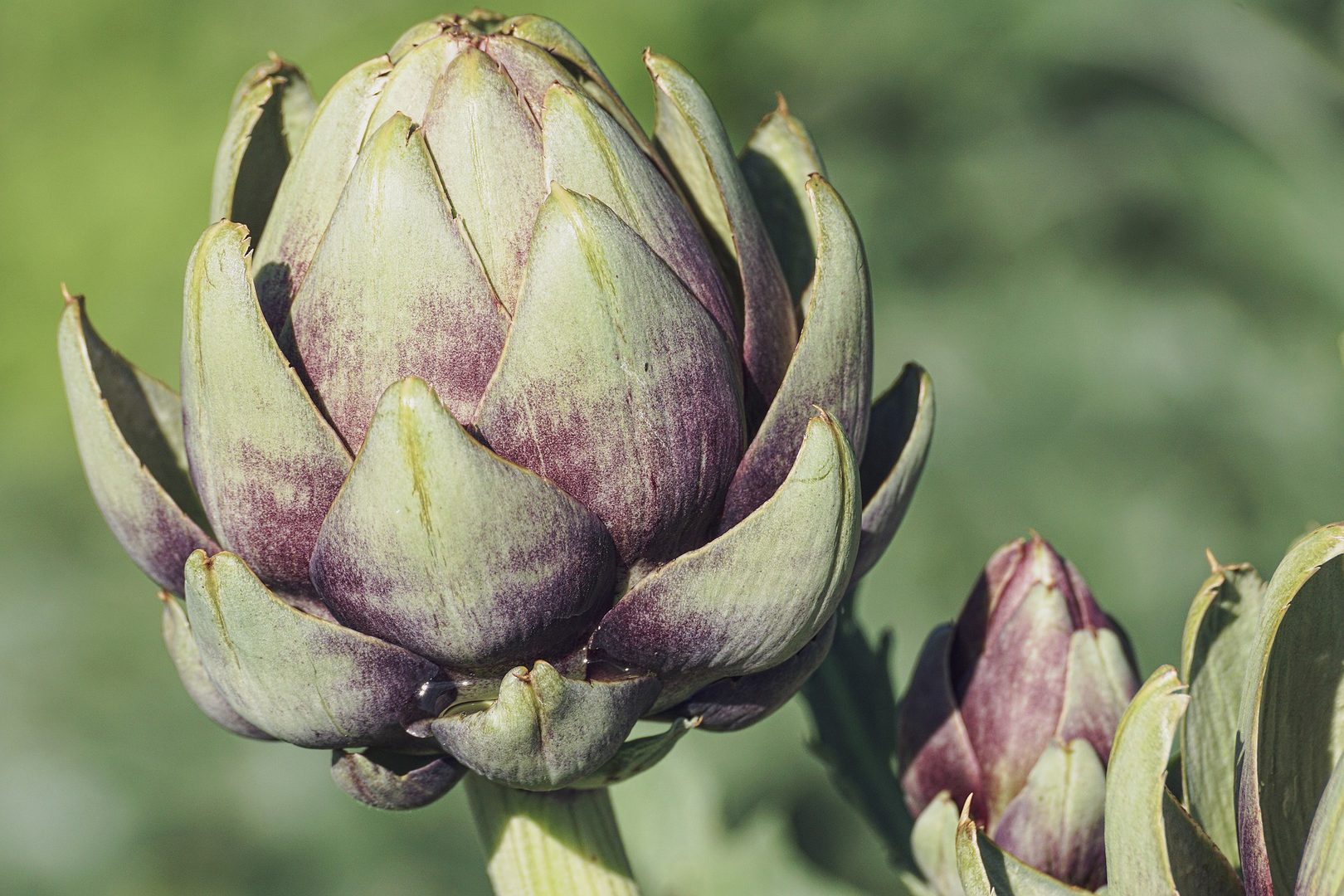


Plant artichokes in rich, well-draining soil. Mix in plenty of compost before planting. Work the soil deeply to allow roots to spread. If the soil is heavy, add organic matter to improve drainage.
Find out how to grow Artichokes in your vegetable garden. Learn what they need, when to plant them and how long until you can enjoy the tasty buds.
 Soil
What soil is good for Globe Artichoke?
 Position
How much sun do Globe Artichoke need?
Plant Artichokes in a spot that gets full sun, at least 6 to 8 hours each day. They will tolerate light afternoon shade in hot climates.
 Frost Tolerant
Are Globe Artichoke frost tolerant?
Artichokes survive light frosts down to about -2°C (28°F). If a hard frost is forecast, protect plants with a layer of straw or a frost cloth overnight. In areas with harsh winters, grow Artichokes as annuals or dig up the roots and store them indoors over winter.
 Spacing
How much space do Globe Artichoke need?
Space Artichoke plants at least 1 metre apart. This gives each plant room to grow wide leaves.
If you plant in rows, space the rows 1.2 metres apart. Crowded plants produce fewer artichokes.
 Planting
When should I plant Globe Artichoke?
Sow Artichoke seeds into punnets filled with moist, seed-raising compost. Globe Artichoke seeds germinate well at temperatures of around 20°C (68°F).
Germination takes about 15 to 20 days, within two months most seedlings will be large enough to be transplanted into the garden.
Plant out in spring once the danger of frost has passed.
Transplant seedlings in the early morning or evening and/or on an overcast day. Avoid planting at peak sun times or on windy days, this will allow your plants to settle in comfortably and protect them from windburn and sunburn.
 Feeding
What do I feed Globe Artichoke?
Before planting your Artichokes, prepare the soil by working in compost. Use a regular application of an organic fertiliser throughout the season. Mulch the soil well to retain moisture.
 Harvesting
When can I harvest Globe Artichoke?
If the artichoke heads are closed or just beginning to open, harvest them. Use a sharp knife to cut the heads, leaving about 5 centimetres of stem attached. Harvest in the morning for the best quality.
 Pests
What pests do Globe Artichoke get?
Artichokes can be attacked by several garden pests. Check the leaves and stems each week for signs of damage.
- Aphids: Spray them off with a strong jet of water.
- Slugs and snails: Pick them off by hand at night or use organic pellets.
- Armyworm: Look for chewed leaves and remove infected plants.
- Artichoke Plume Moth: Remove old leaves and stems after harvest to reduce hiding spots.
- Flea Beetle: Water the soil well and keep the garden free of weeds.
- Loopers: These caterpillars chew holes in leaves. Pick them off by hand.
- Mites: In hot, dry weather, spray the leaves with water to increase humidity. You can also use a horticultrual oil spray to elimate them.
 Diseases
What diseases do Globe Artichoke get?
Diseases that can affect Artichoke plants include: Blight, Powdery Mildew, Artichoke Curly Dwarf Virus, Bacterial Crown Rot, Botrytis Rot (Gray Mold).
To reduce the chance of disease, water at the base of the plant, not the leaves. Good airflow between plants also helps.
If you see signs of disease, remove and bin the affected parts straight away. Do not put them in the compost.
 Notes
Is there anything else I need to know about Globe Artichoke?
Artichokes are short-lived perennials. They will grow for three or four years. In cooler climates, grow them as annuals (replant each year).