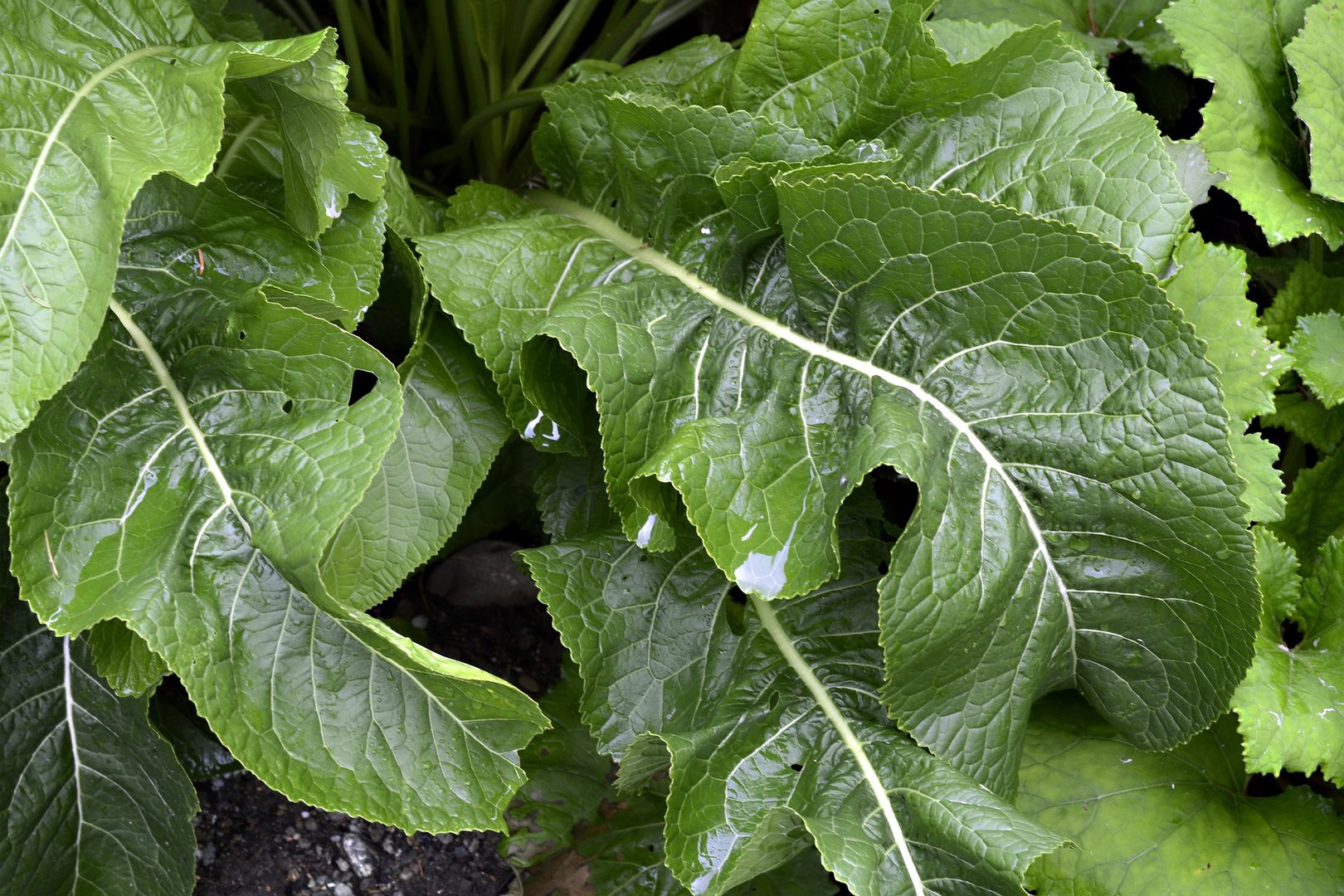


Horseradish grows best in rich, moisture-retentive soil. Mix plenty of compost into the soil before planting. This helps the roots grow large and strong. If the soil is heavy clay or sandy, add organic matter like aged manure and compost. Keep the soil consistently moist but not waterlogged.
If you're looking for a powerful condiment that is easy to grow at home, it's time to learn more about Horseradish. Find out more here!
 Soil
What soil is good for Horseradish?
 Position
How much sun does Horseradish need?
Pick a spot in full sun for the best growth. Horseradish will also grow in light shade, but the roots will be smaller.
 Frost Tolerant
Is Horseradish frost tolerant?
Horseradish is very frost tolerant. The roots survive cold winters with ease. If you live in a cold climate, add a layer of mulch (straw or bark) over the soil in autumn. This protects the roots from freezing. The leaves may die back in frost, but the roots regrow in spring.
 Spacing
How much space does Horseradish need?
Space horseradish plants 40cm apart in the row. Leave 60cm between rows for easy weeding and harvesting. This spacing gives each plant enough room to grow a large, healthy root.
 Planting
When should I plant Horseradish?
Plant horseradish in spring or autumn. Choose a permanent spot because horseradish spreads vigorously. You can also contain it in a large pot.
Prepare the soil first. Dig in well-rotted organic matter (compost or aged manure). Loosen the soil to at least 30cm deep. In a pot, use a top-quality potting mix.
Plant root cuttings (finger-thick pieces of root) vertically or at a 45-degree angle. Cover them with 5cm of soil. Plant crowns or root divisions (with a growing tip, or 'eye') so the eye sits just above the soil. Water well after planting. Keep the soil moist until leaves appear. Space plants 40cm apart. This gives each plant room to grow a large root.
 Feeding
What do I feed Horseradish?
Feeding Horseradish is not usually required if the soil has been prepared well prior to planting. If plants are showing signs of deficiency, a light application of organic fertiliser can be used.
 Harvesting
When can I harvest Horseradish?
Harvest horseradish roots one year after planting. For the best flavour, wait until late winter after a hard frost. Dig up the whole root system. Cut off the large roots for use. Save a few pencil-thick root pieces to replant for the next season. Store unused roots in the fridge in a plastic bag.
 Pests
What pests does Horseradish get?
Pests that affect Horseradish include Cabbage Looper and Flea Beetle.
Cabbage Looper is a green caterpillar that chews holes in leaves. Pick them off by hand or use insect netting if needed.
Flea Beetle is a small jumping beetle that makes tiny holes in leaves. Cover young plants with insect netting. If damage is heavy, spray with pyrethrum (a plant-based insecticide).
 Diseases
What diseases does Horseradish get?
Watch for leaf spots like Bacterial Leaf Spot, Cercospora Leaf Spot and Ramularia Leaf Spot. These cause dark marks on leaves. Remove and bin affected leaves.
Brittle Root makes roots soft and break easily. This disease is worse in wet soil. Plant in well drained soil to avoid it.
White Rust creates white blisters on leaf undersides. Cut off infected leaves right away.
Turnip Mosaic Virus stunts growth and mottles leaves. Pull out and bin infected plants. Control aphids to stop the virus spreading.
 Troubleshooting
How do I troubleshoot my growing problems?
Horseradish can become invasive very quickly. Every small piece of root left in the soil will grow into a new plant. Dig out all roots completely at harvest time.