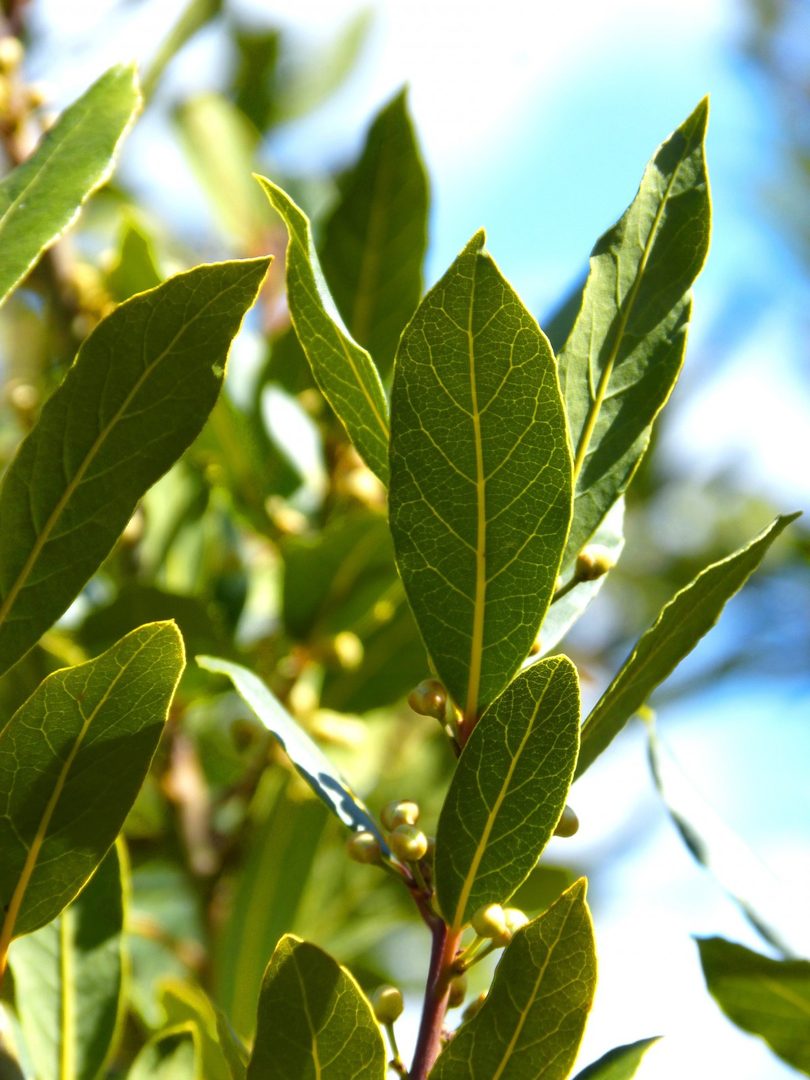


Plant Bay Leaf in rich, well-draining soil. Mix plenty of compost into the soil before planting.
A comprehensive guide to growing Bay Leaf (Bay Laurel), including sun requirements, spacing, planting, feeding, and when to harvest.
 Soil
What soil is good for Bay Leaf?
 Position
How much sun do Bay Leaf need?
Grow Bay Leaf in full sun for best flavour. In hot climates, give it afternoon shade to protect from scorching. Aim for at least 6 hours of direct sun daily.
 Frost Tolerant
Are Bay Leaf frost tolerant?
Bay Leaf can tolerate winter temperatures no lower than -7°C (20°F). In cold climates, bay is best grown in a container that can be kept indoors over winter.
 Spacing
How much space do Bay Leaf need?
Space Bay Leaf plants 2 metres apart. This spacing works well for a hedge. Close spacing can limit air flow and cause disease.
 Planting
When should I plant Bay Leaf?
Plant Bay Leaf in spring, after the last frost. You can also plant at other times if you protect the plant from frost. Plant in the early morning or evening, or on an overcast day. Avoid planting at peak sun or on windy days. This helps your plant settle in without sunburn or windburn.
Dig a hole 2 to 3 times the width of the root ball. The hole should be as deep as the pot the plant came from. Place the plant in the hole so the crown (where the roots and stem meet) sits level with the soil surface. Fill the hole with soil and press gently to remove air pockets.
 Feeding
What do I feed Bay Leaf?
Feed Bay Leaf plants with a balanced organic fertiliser every 6 weeks from spring to late summer. Apply a 5 cm layer of compost around the base in early spring. Stop feeding in autumn to let the plant prepare for winter.
 Harvesting
When can I harvest Bay Leaf?
Harvesting
Harvest Bay Leaves by trimming the stems as needed.
Pick leaves in the morning after the dew dries for the best flavour.
Only take one-third of the leaves from a single branch at a time. This keeps the plant healthy.
 Pests
What pests do Bay Leaf get?
Watch for these pests on Bay Leaf plants: Scale, Psyllids, Aphids, Mites, Slugs and Snails.
- Scale looks like small brown or white bumps on stems and leaves. Wipe them off with a damp cloth or spray with horticultural oil.
- Psyllids are tiny jumping insects that can cause leaf curling. Spray them off with a strong jet of water.
- Aphids are small soft-bodied insects that cluster on new growth. Wash them off or use insecticidal soap.
- Mites are tiny spider-like pests that leave fine webbing. Keep the plant well watered and spray with horticultural oil spray if needed.
- Slugs and snails chew holes in leaves. Pick them off by hand at night or use organic slug pellets.
Check your Bay Leaf plant often. If you see pests early, they are much easier to control.
 Diseases
What diseases do Bay Leaf get?
Diseases that can affect Bay Leaf plants include: Root Rot, Sooty Mold.
 Notes
Is there anything else I need to know about Bay Leaf?
Harvest leaves in the morning when oils are strongest. Dry bay leaves by hanging them in an airy spot for one to two weeks. Store dried leaves in an airtight jar away from light. Use within one year for best flavour.
 Troubleshooting
How do I troubleshoot my growing problems?
If leaves turn yellow, check the soil moisture. Overwatering is a common cause. Let the soil dry out before watering again.
If the plant grows slowly, give it more sunlight or feed with organic fertiliser in spring and summer.
If growing in a container, re-pot into a slightly larger pot each year. This prevents the roots from being root bound.