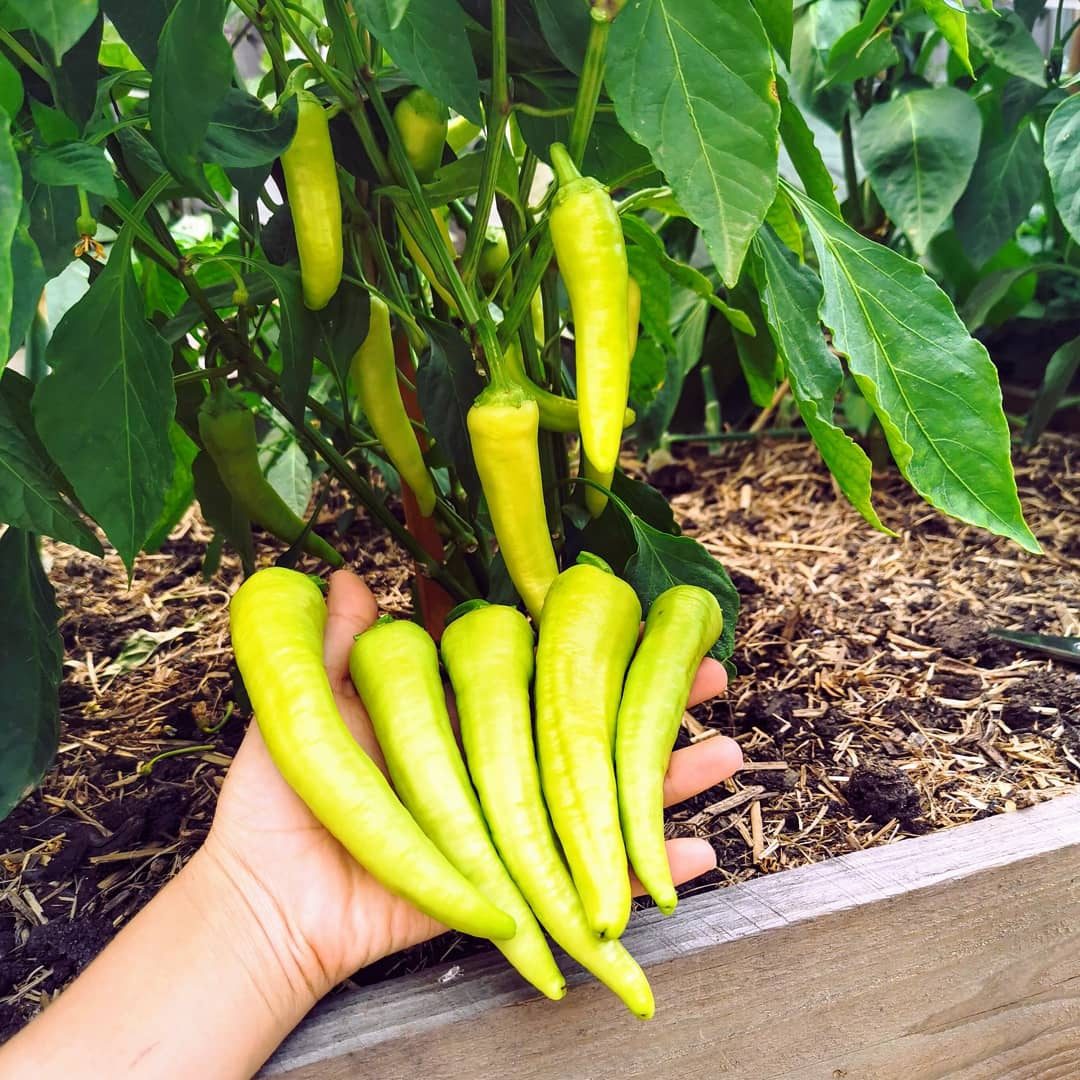


Banana Peppers need rich soil that drains well. Mix in plenty of compost before planting.
A guide on how to grow Banana Peppers, including tips for growing the plant and harvesting.
 Soil
What soil is good for Banana Peppers?
 Position
How much sun do Banana Peppers need?
Banana Peppers need at least six hours of direct sun each day. Choose a spot sheltered from strong winds. If you grow them in less sun, you will get fewer peppers.
 Frost Tolerant
Are Banana Peppers frost tolerant?
No, Banana Peppers are not frost tolerant.
 Spacing
How much space do Banana Peppers need?
Space Banana Pepper plants around 35-40cm apart.
 Planting
When should I plant Banana Peppers?
Banana Peppers are best grown in temperatures between 18 and 30°C (65–86°F)
For a head start, sow Banana Pepper seeds indoors in late winter to be planted out in spring. Plant out once the danger of frost has passed.
Seeds can also be sown directly outdoors in spring. Keep soil moist and warm to ensure successful germination.
If transplanting seedlings, plant out in the early morning or evening and/or on an overcast day. Avoid planting at peak sun times or on windy days, this will allow your plants to settle in comfortably and protect them from windburn and sunburn.
 Feeding
What do I feed Banana Peppers?
Feed your Banana Pepper plants with an organic fertiliser regularly throughout the season. Mulch the soil well to retain moisture.
 Harvesting
When can I harvest Banana Peppers?
Banana Peppers are generally harvested once they turn yellow, they can be harvested at any size. They will crop continuously throughout the season.
 Pests
What pests do Banana Peppers get?
Pests can attack your Banana Pepper plants. Check the leaves and stems each week. Remove pests by hand or with a spray of water. Common pests include:
- Aphids (small green or black insects on new growth)
- Slug and Snail (chew holes in leaves and fruit)
- Fruit Fly (lay eggs in ripening fruit)
- Spider Mites (tiny red or yellow pests, cause webbing on leaves)
- Thrips (slender insects that scar fruit and leaves)
- Root Knot Nematodes (tiny worms in soil, cause stunted roots)
- Potato Beetle (yellow and black striped beetle, eats leaves)
- Flea Beetle (small jumping beetles, make small holes in leaves)
- Leaf Miner (tunnels inside leaves)
- Leaf Roller (caterpillar that rolls leaves together)
- Pepper Weevil (small snout beetle, damages buds and fruit)
- Tomato Fruit Worm (caterpillar that burrows into fruit)
If pests become a problem, use a natural spray like a horticultural oil or insecticidal soap. Keep the garden clean to reduce hiding spots. Use insect netting to protect from fruit fly and other insects.
 Diseases
What diseases do Banana Peppers get?
Diseases that can affect Banana Peppers include: Mosaic Virus, Leaf Spot, Blight, Verticillium Wilt, Anthracnose, Damping-off, Fusarium Wilt, Powdery Mildew, Bacterial Canker, Blossom-end Rot, and Tomato Spotted Wilt Virus.
Prevent these diseases by watering the soil not the leaves. Leave enough space between plants for air flow. Remove any infected leaves or plants right away. Blossom-end rot often means the plant needs steady water, so water deeply and keep the soil consistently moist.
 Troubleshooting
How do I troubleshoot my growing problems?
Stake your Banana Pepper plants to support the heavy fruit. Insert a stake at planting time to avoid root damage.
If the fruit gets white or tan patches, it is sunburned. Cover the plants with shade cloth when the sun is extreme.


