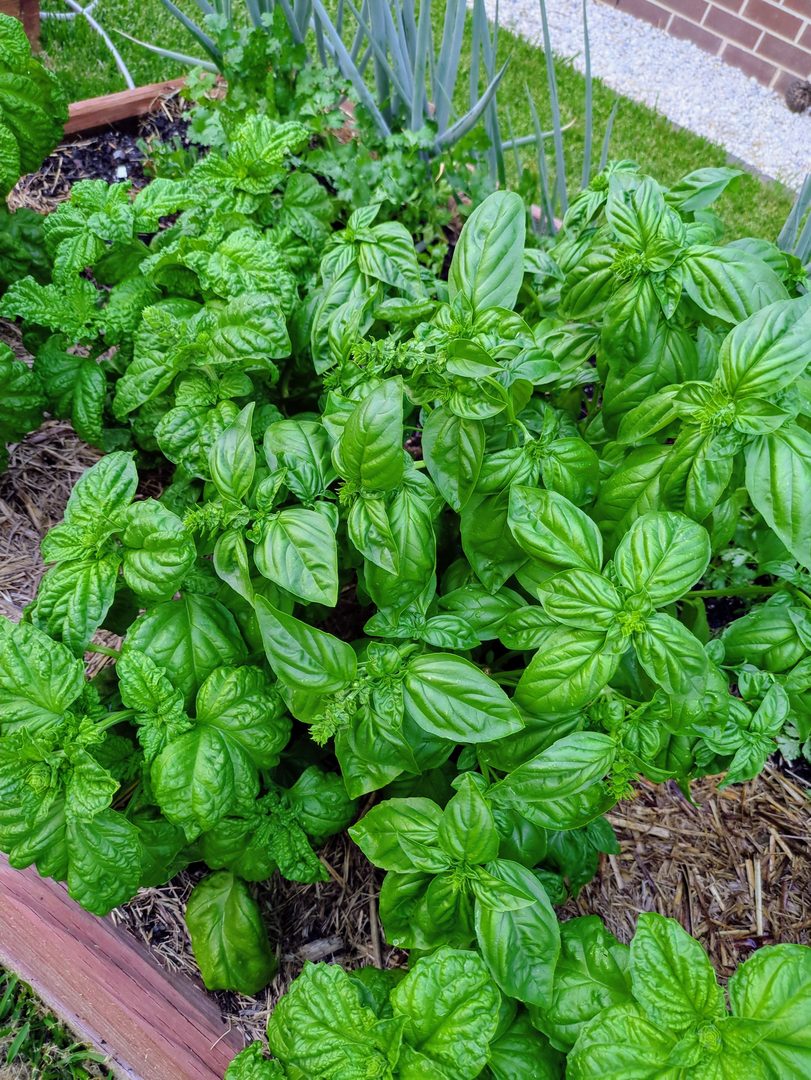


Plant Basil in rich, well draining soil with plenty of compost mixed in.
A growing guide for Basil, including spacing, planting, and harvesting tips. Includes notes on pests and troubleshooting.
 Soil
What soil is good for Basil?
 Position
How much sun does Basil need?
Give your basil a spot with full sun to light afternoon shade. If summer heat is intense, afternoon shade keeps the plant healthy. Protect basil from strong winds by planting in a sheltered area.
 Frost Tolerant
Is Basil frost tolerant?
Basil plants are not frost tolerant. Frost can damage or kill the plant. Protect basil by covering it with a frost cloth or moving pots indoors when frost is expected. Plant basil outdoors only after the last frost date has passed.
 Spacing
How much space does Basil need?
Plant Basil roughly 30cm apart.
 Planting
When should I plant Basil?
Plant Basil in spring after the last frost. Wait until daytime temperatures stay above 21°C (70°F). Night temperatures should be above 10°C (50°F).
If transplanting seedlings, plant them in the early morning or evening. An overcast day is also a good time. Avoid planting at peak sun or on windy days. This helps your plants settle in and protects them from windburn and sunburn.
 Feeding
What do I feed Basil?
Before planting Basil, prepare the soil by working in compost. You can feed with a light application of organic fertiliser throughout the season, however fertilising is not essential if the soil is well prepared.
 Harvesting
When can I harvest Basil?
Harvest Basil from the top down by trimming or pinching off the top sets of leaves, up to 1/3 of each stem.
Harvest regularly to prevent the plant from flowering and going to seed. If you see flower buds, pinch them off to promote new leaf growth.
 Pests
What pests does Basil get?
Basil attracts many common garden pests. Check your plants weekly for signs of damage.
- Aphids: Small, soft insects on leaves and stems. Spray them off with a strong jet of water.
- Slugs and snails: They eat holes in leaves at night. Pick them off by hand, set up beer traps or use organic pellets.
- Flea beetles: Tiny jumping beetles that make small holes in leaves. Use row covers on young plants.
- Japanese beetles: Metallic green beetles that eat leaves and flowers. Shake them off into a bucket of soapy water.
- Cutworms: Caterpillars that chew stems at soil level. Wrap a paper collar around each stem at planting.
- Grasshoppers: Large insects that chew leaves. Use fine netting to protect plants.
- Leafminers: Larvae that tunnel inside leaves. Remove and bin affected leaves.
- Root knot nematodes: Microscopic worms that swell roots. Rotate crops and choose resistant basil varieties.
If you catch pests early, you can control them without harsh chemicals.
 Diseases
What diseases does Basil get?
Diseases that can affect Basil plants include: Downy Mildew, Leaf Spot, Fusarium Wilt, Gray Mold, and Root Rot.
To prevent disease, water the soil, not the leaves. Wet leaves invite fungal infections. Space plants 30cm apart for good airflow. Avoid planting Basil in the same spot each year.
If you see yellow leaves or white fuzz on leaf undersides, that is Downy Mildew. Remove infected leaves right away. For Leaf Spot, snip off spotted leaves and clear fallen debris.
 Notes
Is there anything else I need to know about Basil?
Pinch off Basil flower buds as they appear to keep the plant producing new growth.